





OSCP: Reliable Tactical Navigation Without GPS
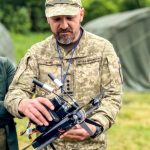
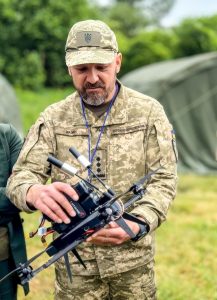
Modern warfare has evolved, indicating a need for reliable navigation systems beyond traditional GPS. In conflict zones like Ukraine, over-reliance on GPS can become a critical vulnerability. OSCP, a Canadian company, is leading the charge with innovative navigation technology designed for drones, robotics, and more.
Why GPS-Free Navigation is Crucial
For decades, global navigation satellite systems, such as GPS, have been fundamental for navigation. However, the advancement in electronic warfare has made these systems susceptible to disruptions like jamming and spoofing—demonstrated in recent conflicts like Ukraine. Drones, supply vehicles, and infantry can be rendered blind, compromising missions and safety.
About OSCP and Their Innovations
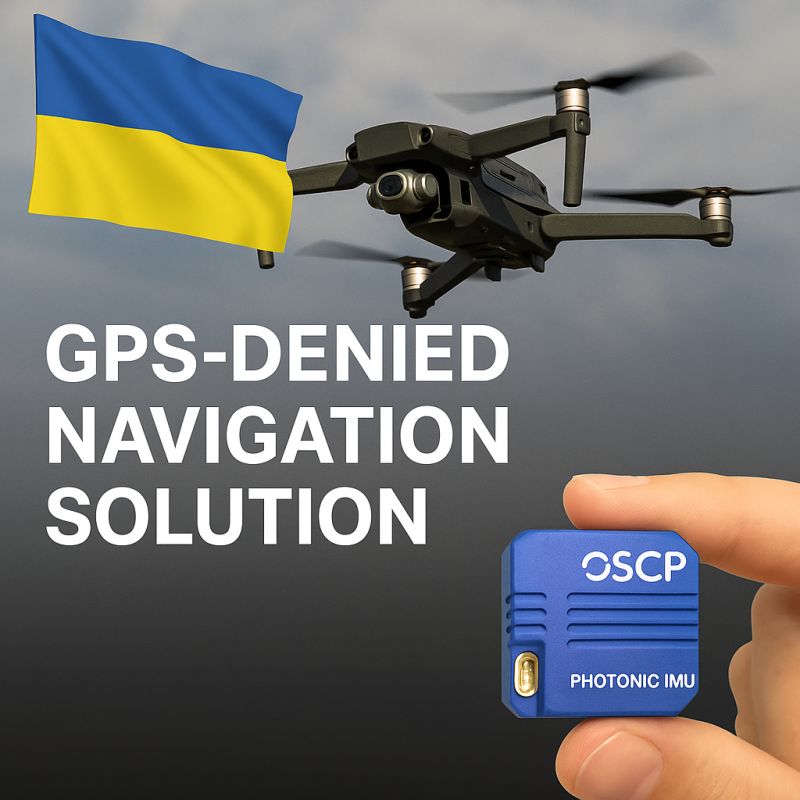
OSCP is pioneering in photonic inertial measurement units (IMUs). These compact, GPS-independent sensors cater to various uses, including:
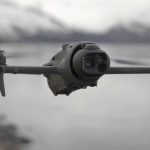
- Loitering and FPV drones
- Guided munitions and UAVs
- Ground robots, sappers, and troops
- Rail transport and space missions
OSCP provides reliable navigation solutions, impervious to jamming, vital for Ukrainian defense forces and NATO allies.
The Role of Inertial Measurement Units (IMUs)
OSCP’s systems utilize photonic IMUs, integrating gyroscopes and accelerometers to detect positional changes. Being self-contained, these IMUs are:
- Resistant to jamming and electronic interference
- Compact and energy-efficient
- Capable of precise navigation for both aerial and terrestrial systems
Their flagship product, the MK2M, incorporates redundant gyroscopes to minimize drift, achieving threefold performance improvements over competitors. This makes them suitable for a wide range of applications, from robotics to agriculture and logistics.
“Designed for GPS-deprived environments, the MK2M offers accuracy three times greater than similar products due to its redundant gyroscopes.”
Real-World Applications
Military and Defense: OSCP’s sensors are deployed by Ukrainian and NATO forces, enhancing loitering munitions, drones, and robotic ground missions. Their components suit a variety of operations, from autonomous vehicles to personal navigation devices for troops.
Commercial Uses: Sectors such as agriculture, mining, rail, and space exploration are also adopting these IMUs to maintain precision in challenging environments where GPS signals wane.
Space Exploration: Satellites and spacecraft utilize IMUs for crucial functions in orbit, extending operational reliability where traditional navigation aids are unavailable.
What Sets OSCP Apart?
| Feature | OSCP IMUs (MK2M, MK2E) | Traditional IMUs or GPS-based Nav |
|---|---|---|
| GPS Independence | Yes (total) | Partial |
| Resistance to Jamming | High (immune) | Low |
| Accuracy/Drift | 3× better, redundant | Susceptible to drift |
| Size & Power | Ultra-compact, efficient | Larger, higher power |
| Cost | Less expensive | Costlier |
| Field-Proven | Yes (military, rail, space) | Limited in denied settings |
Key technologies include redundant gyroscopes, photonic innovations for enhanced precision, and electromagnetic immunity to tackle jamming threats.
The Bigger Picture: Alternative Navigation
The U.S. Department of Defense is prioritizing assured Positioning, Navigation, and Timing (PNT) solutions beyond GPS. Complementary approaches encompass relative and absolute PNT and sensor fusion to maintain accuracy over long periods without relying entirely on satellites.
Field Lessons
Drone pilots and engineers support using advanced inertial sensors for maintaining operational accuracy when GPS is compromised. Training for GPS-denied scenarios is becoming routine, with military exercises incorporating jamming simulations to test technology and teams.
OSCP’s Commitment: Innovation with Purpose
Every OSCP sensor carries a story of innovation and collaboration. The Canadian-based company works with Ukrainian and NATO entities to address modern warfare’s challenges, ensuring operators—from soldiers to automated systems—navigate confidently even in disrupted environments.
Choosing the Right Navigation System
For assured performance in GPS-denied scenarios:
- Assess the mission needs for independent navigation support.
- Seek field-proven solutions, especially from adversarial experiences.
- Evaluate size, weight, energy efficiency, and affordability.
- Select systems with open integration protocols for adaptive use.
- Invest in operator training for proficiency without GPS reliance.
Looking Ahead: Lifelong Navigation Beyond GPS
The demand for assured navigation will escalate with advancements in drones, autonomous vehicles, and space exploration—ensuring that, regardless of challenges, staying accurately located will remain pivotal.
Whether securing freedom or pioneering future technologies, OSCP’s GPS-independent navigation is a groundbreaking innovation crucial when satellite support is unavailable.
For further insights into GPS-denied navigation and OSCP’s contributions, consult our expert team eager to assist with successful mission planning.
“Not all those who wander are lost, but those equipped with OSCP seldom truly wander.”