

New Drone Simulation Platform from AIR6 Systems Set to Open Up BVLOS Autonomy
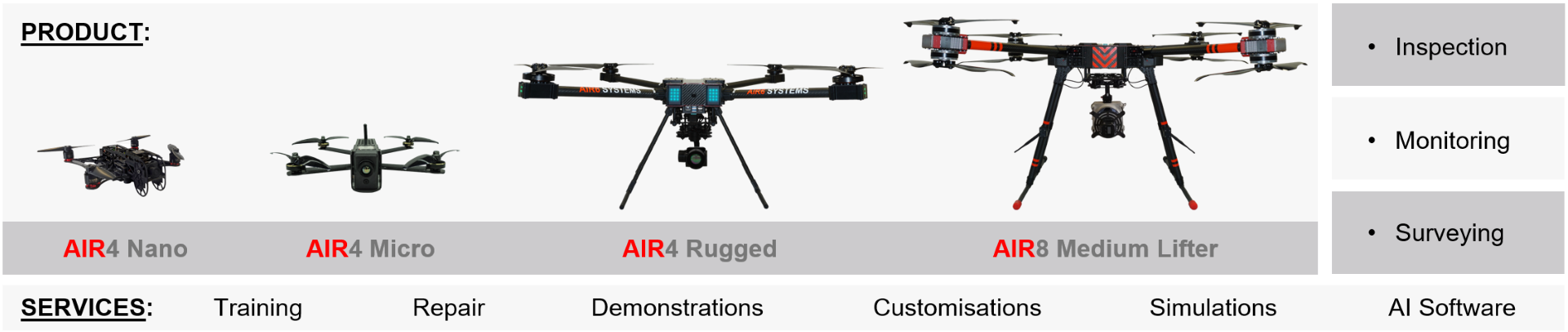
AIR6 Systems has made significant strides in developing high-performance drones for various applications, including their AIR8 Medium Lifter and AIR4 series. These drones facilitate both manual and automated flights, which consequently enhance inspection, surveying, and monitoring efficiency. A recent webinar revealed the advantages of a new drone simulation platform that AIR6 has introduced.

The AirborneSIM is a cutting-edge drone simulation platform aimed at transforming UAV operations. This tool allows users to simulate high-risk missions without leaving the office, enabling them to mitigate risks while testing Beyond Visual Line of Sight (BVLOS) operations to ensure compliance and safety. During the webinar, Alex Fraess-Ehrfeld, AIR6 Systems’ founder and CEO, discussed how simulation technology can significantly enhance drone operations.
Jeremiah Karpowicz queried about the evolving nature of drone autonomy, prompting Fraess-Ehrfeld to emphasize that the advances in drone and sensor technology have been pivotal. He explained that autonomy primarily aims to ease the pilots’ workload, making operations more efficient, safer, and less reliant on individual flying skills.
Fraess-Ehrfeld noted that AIR6 Systems’ focus is primarily on BVLOS autonomy—wherein the pilot is separated from the drone’s starting and landing locations. Here, (semi-)autonomy will be crucial as AI tools will provide risk assessments and ensure compliance with airspace regulations.
As for the value clients derive from deployment, AIR6’s drones cater to tasks including inspections, monitoring, and logistics. These applications deliver substantial economic benefits—enhancing task completion speed, safety, and overall cost-effectiveness. One standout example is a drone designed for pipe inspections that eliminates the need for scaffolding and can complete tasks significantly faster than traditional methods.
Another innovative solution, the DrSOLAR, utilizes SWIR sensors enabling O&M teams to swiftly identify faults in solar panels, marking a substantial improvement in the efficiency of solar inspections.
Simulation has emerged as a critical strategy for AIR6 Systems, initially developed for offshore wind turbine inspections. It allows rigorous testing before actual field deployment. Beyond risk assessment and operational planning, the simulation tool is instrumental for pilot training and regulatory demonstrations, establishing operational safety and effectiveness.
AIR6 Systems’ AirborneSIM uniquely replicates their drones with high accuracy. It integrates with leading flight planning tools, making it user-friendly and allowing for effective mission preparation and validation in a realistic simulated environment.
Despite the challenges posed by regulations, particularly in Europe, AIR6 remains committed to developing solutions for sectors with significant potential, such as emergency medical applications. Their DrUBER project aims to establish a network for medical drone deliveries in areas like Essex, UK.
For organizations seeking a high-performance drone to refine workflows, AIR6’s offerings emphasize performance, customization, and adaptability, ensuring long-term value. They continue to champion their open-architecture design and provide ongoing support and training for users.
For more insights, view the recorded webinar on AirborneSIM [https://www.linkedin.com/events/7290699509959958528/about/] or connect with AIR6 at XPONENTIAL Europe, happening February 18-20.
For detailed insights on AIR6’s advancements, read the original article here.