

The End of a Perfect Record in Aviation Safety
For several years, aviation experts have celebrated the remarkable safety record of US commercial airlines under Part 121, particularly as a benchmark for uncrewed aviation. However, this impressive streak of 16 years without major incidents in the National Airspace System (NAS) came to a sudden halt on January 29.
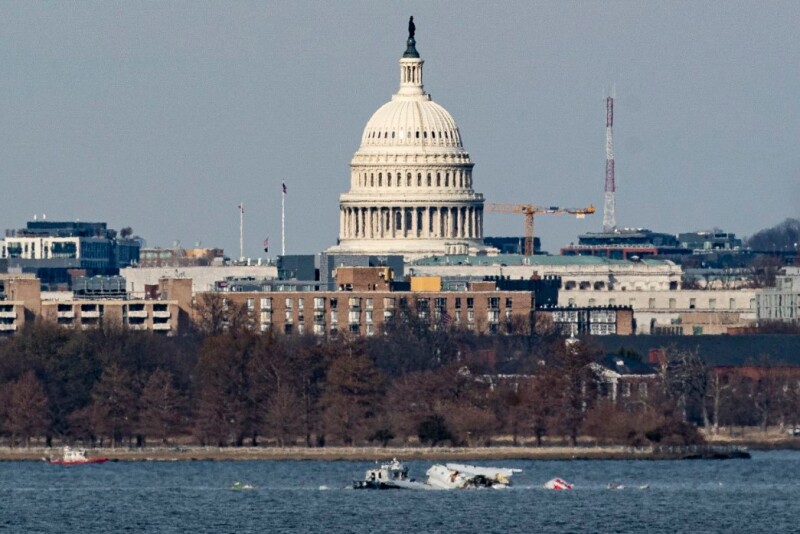
At 8:45 PM, American Airlines flight 5342, a regional jet flying in from Wichita, Kansas, was involved in a mid-air collision over the Potomac River, close to Ronald Reagan Washington National Airport (KDCA). The aircraft—a Canadair Regional Jet 700, specifically operated by PSA Airlines, a subsidiary of American Eagle—collided with a US Army Black Hawk helicopter from a nearby base.
The CRJ700, identified as BlueStreak 5342 in radio communications, had been cleared for an approach to runway 33 at KDCA and was executing a circling maneuver to land. The military helicopter, known as Priority Air Transport (PAT) 25, was following a designated route that limited its altitude to 200 feet Above Ground Level (AGL) as per the published charts.

The incident remains under investigation, but initial reports indicate that both aircraft were following their respective procedures. The CRJ700 was conducting its approach for runway 33, while the helicopter was navigating along its prescribed route. It’s worth noting that both aircraft were potentially at the same altitude during the incident, complicating visual separation for pilots.
Nighttime operations can lead to confusion, especially when the lights of aircraft blend with city lights, making it difficult for pilots to distinguish distances and movements. The helicopter pilots utilized Night Vision Goggles (NVGs), which enhance visibility at night but impair peripheral awareness and depth perception.
Communication issues may also have played a role. The helicopter was communicating on a military frequency that the CRJ700 pilots were not monitoring, which could have prevented them from being aware of nearby traffic. Moreover, an additional American Airlines flight, an Airbus 319, was positioned directly behind the CRJ700 during its approach, further complicating the situation.
The exchange between Air Traffic Control (ATC) before the crash highlights the potential for miscommunication. Despite clearances and an acknowledgment of visual separation, the two aircraft collided at 400 feet AGL, just one mile from the final approach for runway 33.
Lessons Learned and the Future of Aviation Safety
This event marks the first major multi-fatality accident involving a commercial airline since the rise of uncrewed aviation in 2012. For many in the industry, this incident serves as a harsh reminder of the safety challenges that lie ahead as unmanned and manned aircraft share the same airspace.
For the uncrewed aviation sector, critical lessons are emerging from this tragedy. The dependence on voice communication and pilot situational awareness must be reassessed to prevent future mishaps. As we move towards integrating drones and airborne taxis without pilots, it is essential to adopt advanced technologies that enhance aircraft separation and safety.
Implementing robust Detect and Avoid (DAA) systems and integrating Uncrewed Traffic Management (UTM) with existing Air Traffic Control (ATC) systems is vital. This technological advancement could play a crucial role in ensuring the safety of both crewed and uncrewed aircraft within the NAS.
We must take this incident as a crucial prompt that indicates the current ATC framework is at saturation point, necessitating new technology solutions for the safety of all airborne vehicles.
For further insights and updates regarding commercial drones, please refer to the original article here.